 Fossil Deck
Armored Dinosaurs
Plated and club-tailed. Walking fortresses — spiked plates, bony armor, and heavy tail clubs.
Twelve cards in the The Defenders expedition. This deck is free in the app.
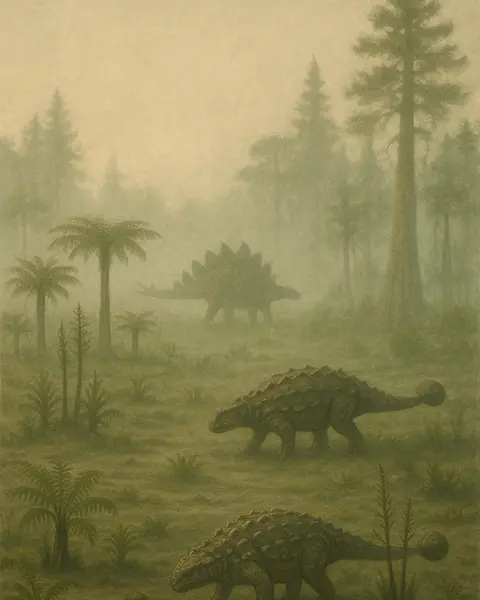
The 12 cards
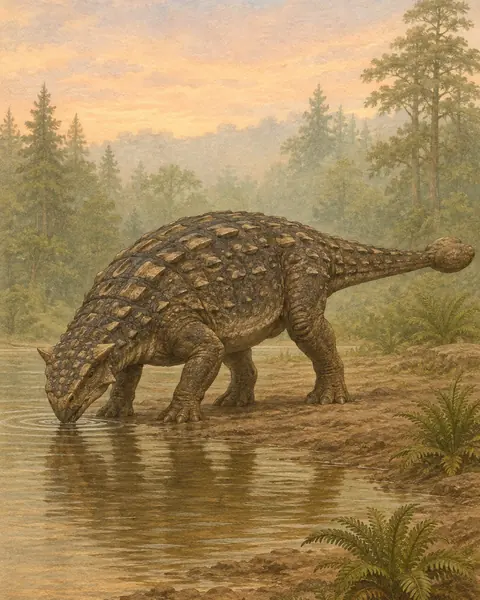
Ankylosaurus was a low, broad plant-eater sheathed in bony armor from its skull to its tail, which ended in a massive club of fused bone estimated to weigh tens of kilograms.
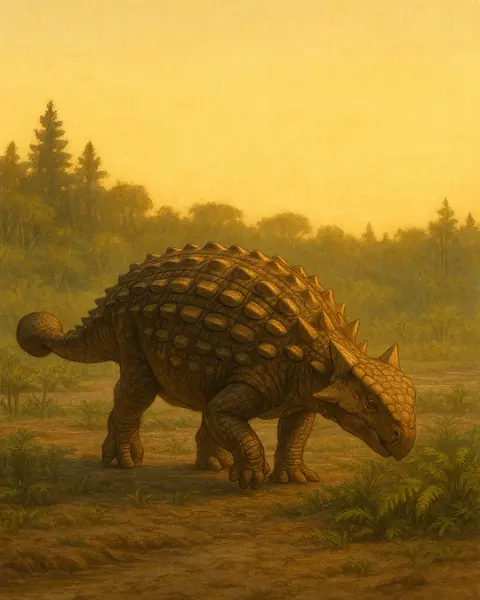
Euoplocephalus was a heavily armored plant-eater roughly 5.3 meters long, whose back was paved in banded rows of bony plates and whose stiff tail ended in a single heavy bony club.
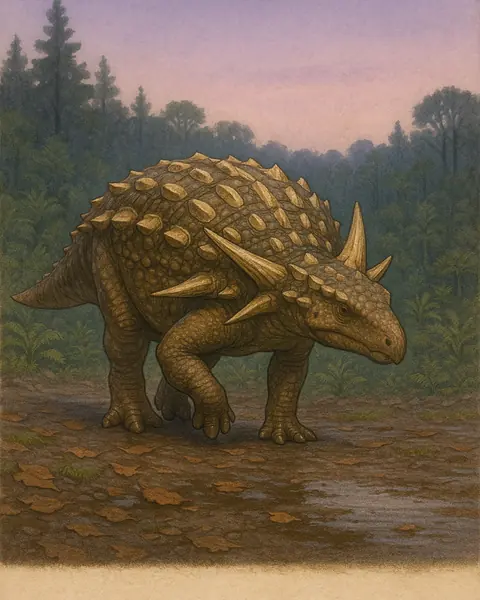
Edmontonia was a low, tank-like nodosaur that grew up to about 6.6 meters long and carried large forward-pointing shoulder spikes, the biggest front pair splitting into two points.
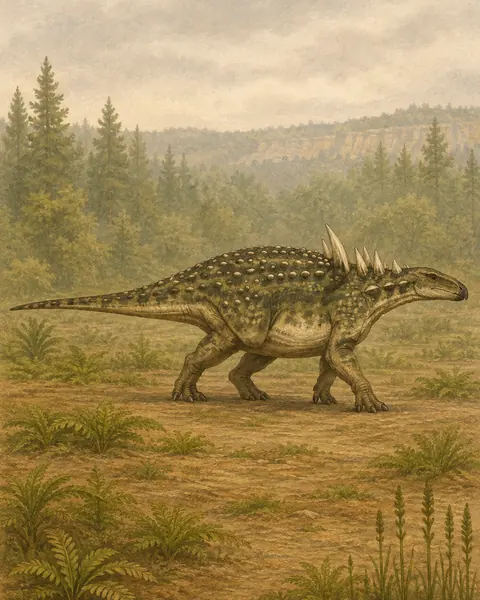
Sauropelta carried a striking row of large spikes along each side of its neck, the biggest standing tallest just behind its head.
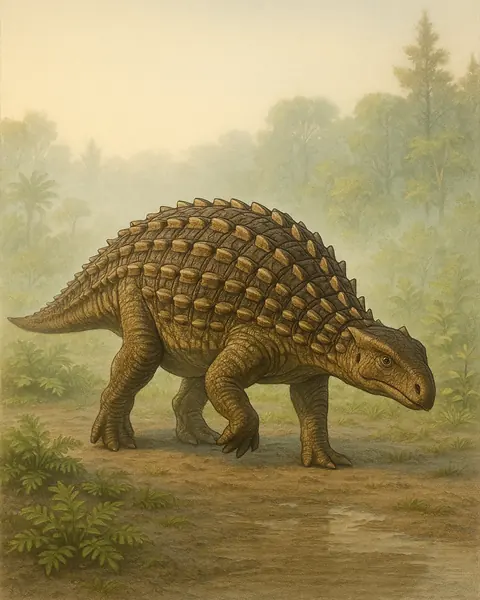
Nodosaurus was a low-slung, club-less armored dinosaur roughly 6 meters long whose back was sheathed in neat alternating bands of bony plates and smaller nodules — a pattern so orderly it inspired the species name "textilis," meaning woven.
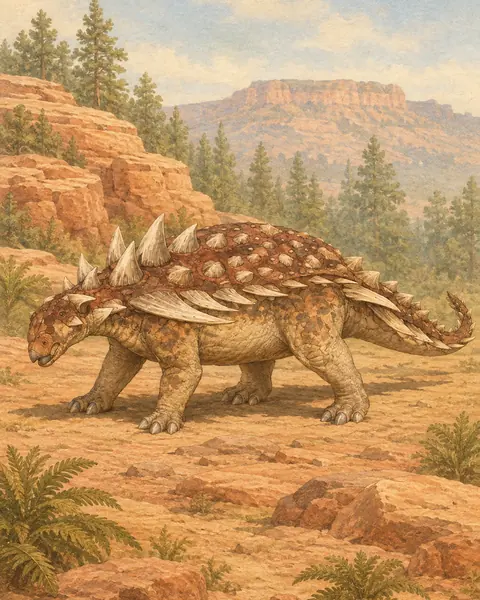
Gastonia was a heavily armored plant-eater about 5 meters long whose shoulders and flanks bristled with rows of large triangular spikes, and whose hips were shielded by a solid plate of fused bone.
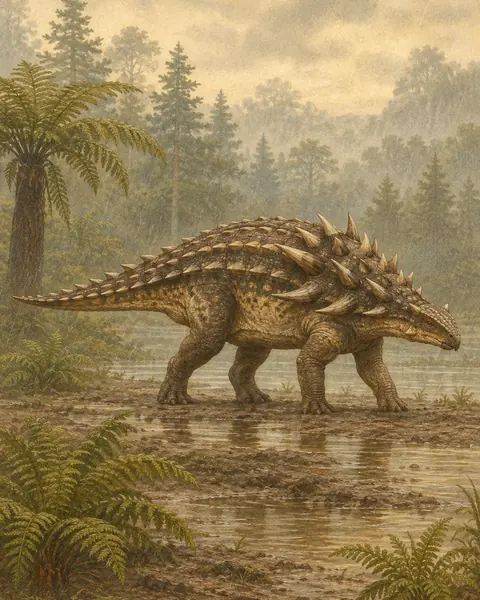
Polacanthus was a low, four-legged armored plant-eater that carried a large solid shield of fused bone over its hips, an unusual feature that gives it its distinctive look.
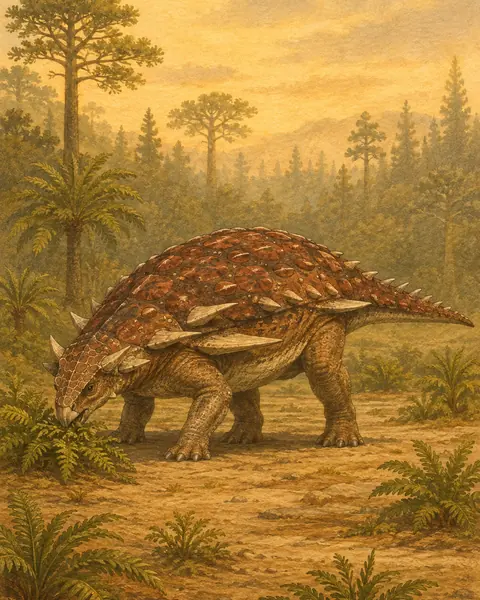
At only about 3 to 3.5 meters long, Gargoyleosaurus is one of the earliest and smallest armored dinosaurs known, living roughly 150 million years ago.
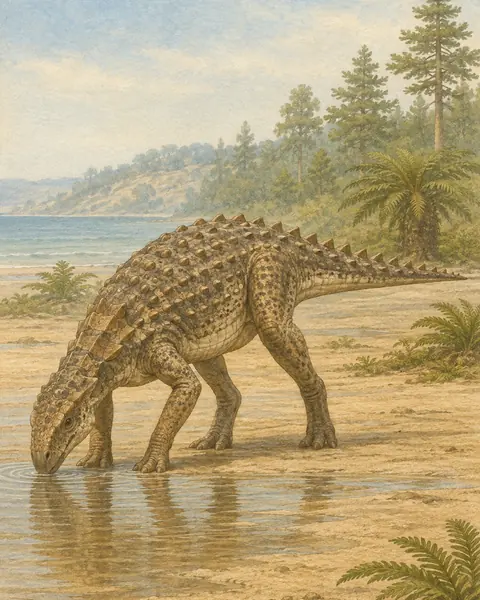
Minmi was a small armored plant-eater, only about 3 meters long, and was for a time one of the very few dinosaurs known from Australia.
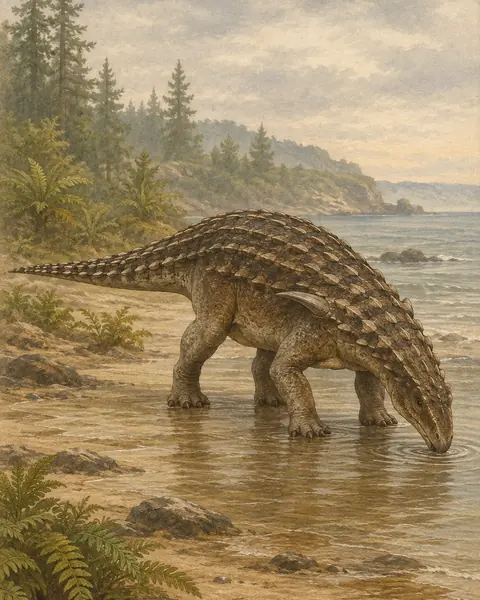
Borealopelta is one of the best-preserved dinosaurs ever found, a roughly 110-million-year-old armoured plant-eater whose skin, bony plates and even its last meal survived intact.
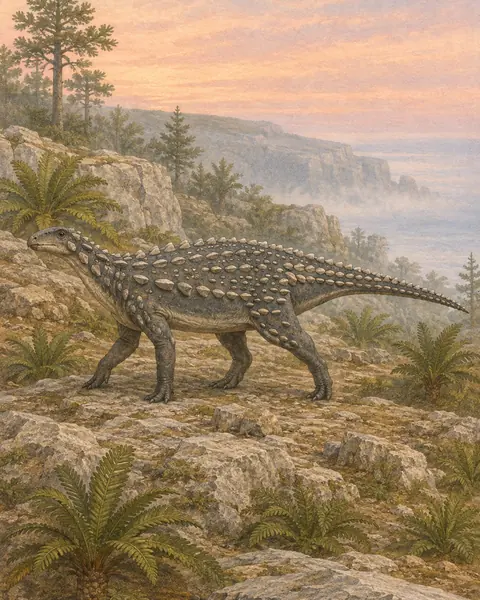
Scelidosaurus is one of the earliest and most completely known armored dinosaurs, living roughly 190 million years ago along what is now England's Jurassic Coast.
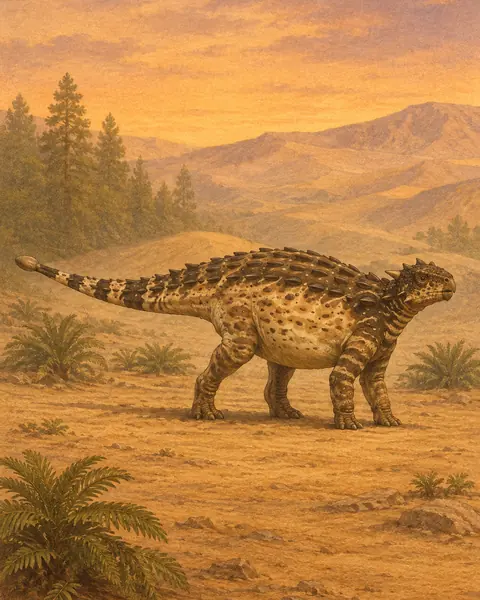
Pinacosaurus is one of the best-known armored dinosaurs, represented by dozens of specimens dug from the Gobi Desert, including groups of young animals found side by side.