 Fossil Deck
Horned Dinosaurs
Frills and horns. The ceratopsians — great bony frills and forward-swept brow horns.
Twelve cards in the The Defenders expedition. This deck is free in the app.
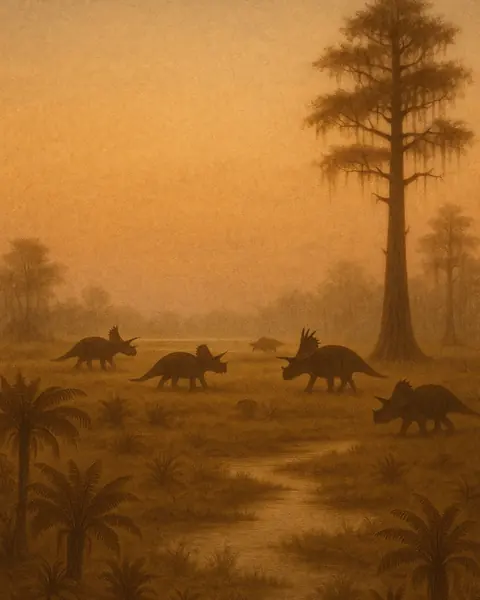
The 12 cards
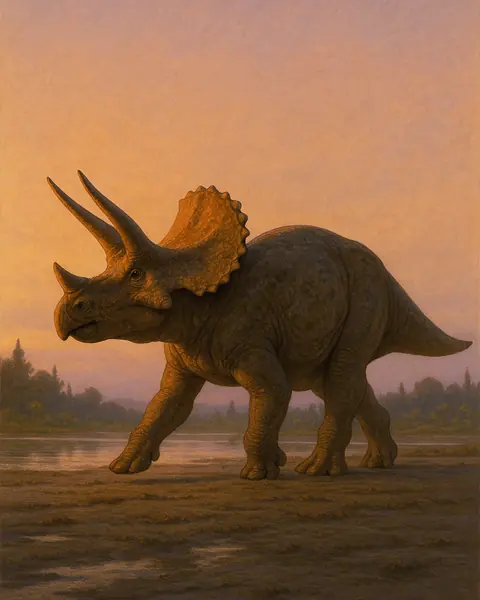
A single Triceratops skull could grow to roughly 2.5 meters long — among the largest heads of any land animal ever.
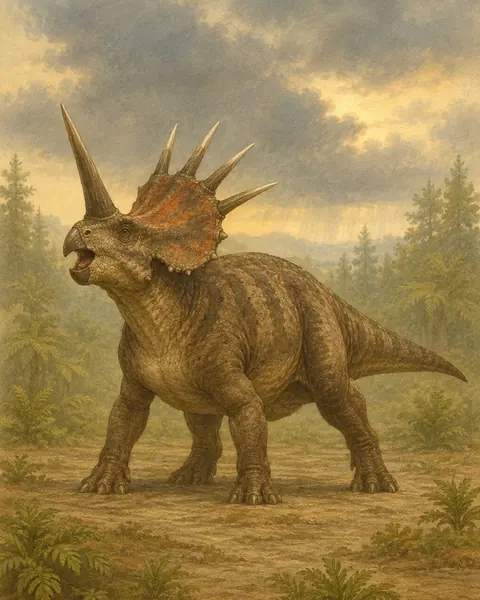
Styracosaurus carried a single long nose horn that may have reached up to roughly 55 to 60 centimeters, crowned by a spectacular ring of long spikes flaring off the top of its frill.
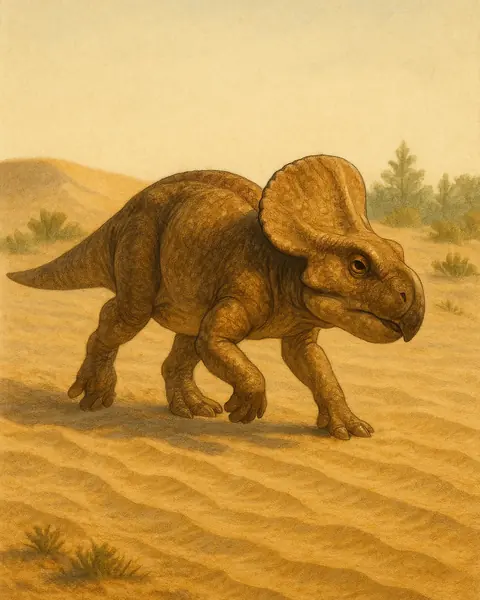
About the size of a large sheep, Protoceratops was a stocky plant-eater with a big bony neck frill but no true horns — an early relative of the giant horned dinosaurs.
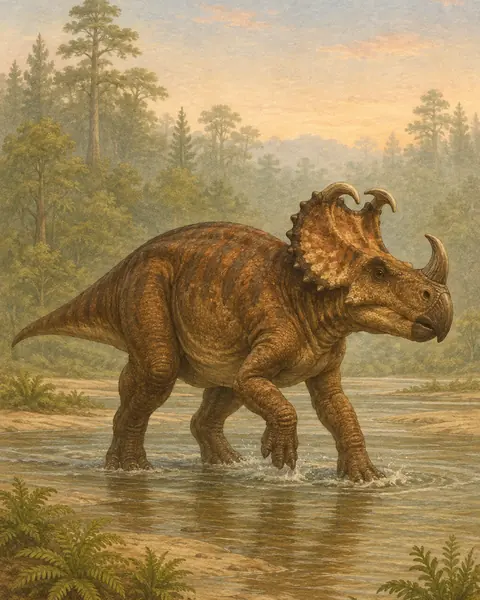
Centrosaurus is known from vast bonebeds in Alberta that preserve the remains of hundreds — possibly thousands — of animals in single sites, which many researchers read as evidence that it moved in large herds.
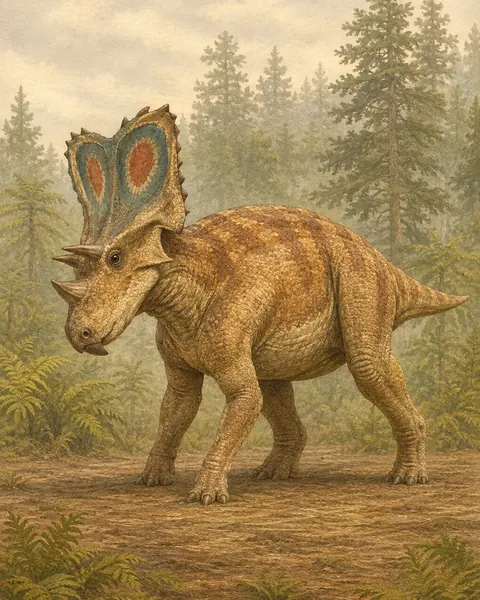
Chasmosaurus carried a very large frill that was almost hollow — its bony shield was pierced by two window-like openings so wide that the whole crest was more open frame than solid plate.
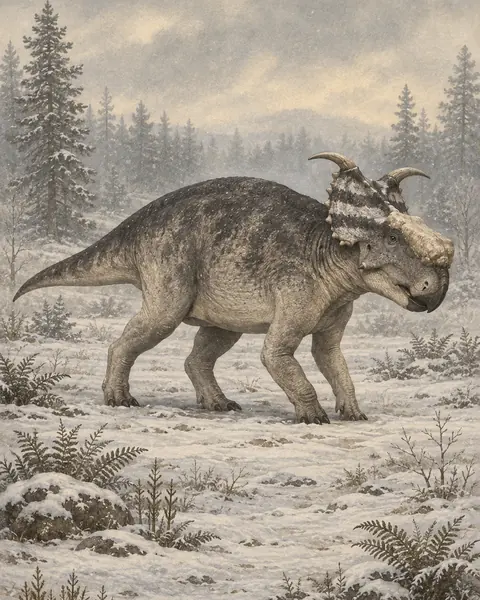
Instead of a nose horn, Pachyrhinosaurus grew a huge slab of thick, roughened bone called a boss across its snout, with a second boss over its brows.
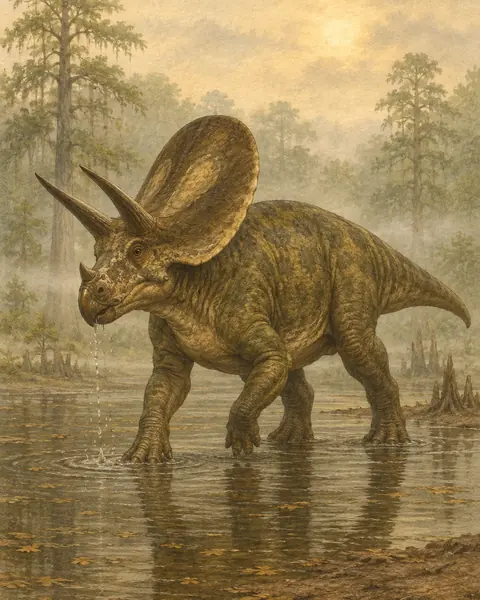
Torosaurus had one of the largest skulls of any known land animal — the head plus its enormous frill could reach roughly 2.5 meters long.
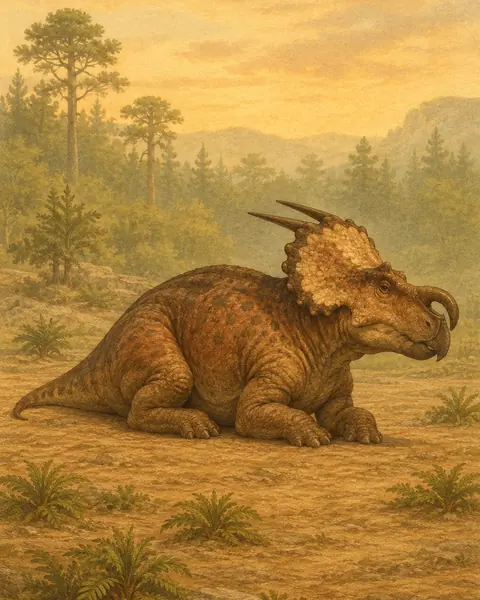
Einiosaurus is instantly recognizable for its single large nose horn that curves strongly forward and down like a bottle-opener, unlike almost any other horned dinosaur.
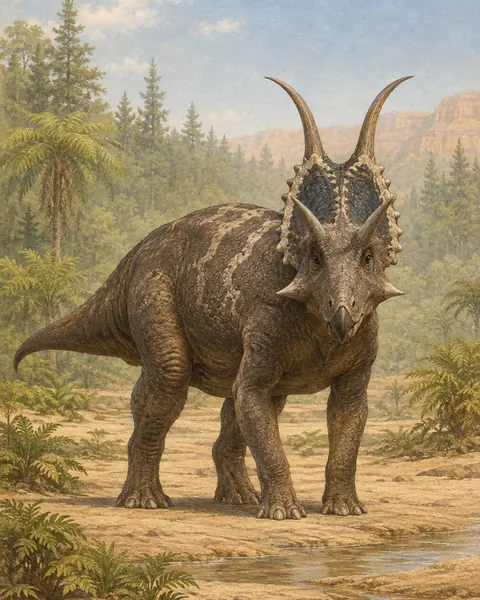
Diabloceratops is one of the oldest known horned dinosaurs of its kind in North America, living about 81 million years ago.
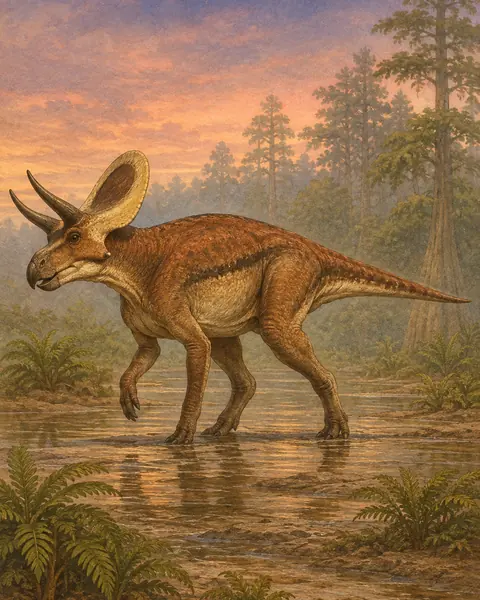
Zuniceratops lived about 90 million years ago and is one of the earliest known horned dinosaurs from North America, already carrying a pair of long brow horns but no nose horn.
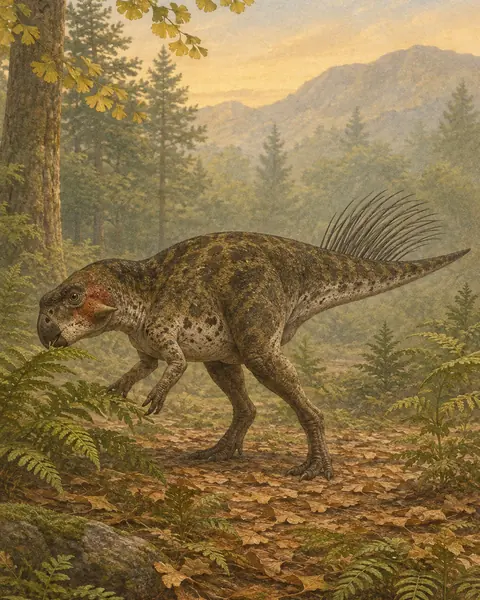
Psittacosaurus is known from hundreds of fossils spanning newborns to adults, making it one of the most completely understood of all dinosaurs.
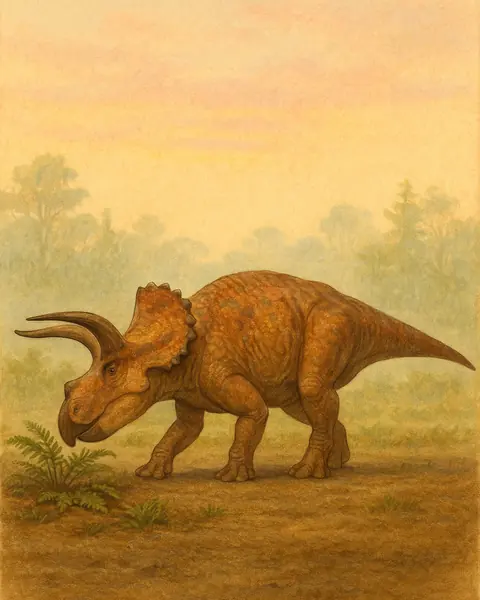
Nasutoceratops is famous for its unusually large rounded snout and a pair of long brow horns that curved forward and outward over its beak, more like the horns of a modern longhorn steer than those of most horned dinosaurs.