 Fossil Deck
Cretaceous Predators
Hunters of the last age. The apex meat-eaters of the Cretaceous — sail-backed, horned, and swift.
Twelve cards in the The Great Ages expedition. This deck is free in the app.
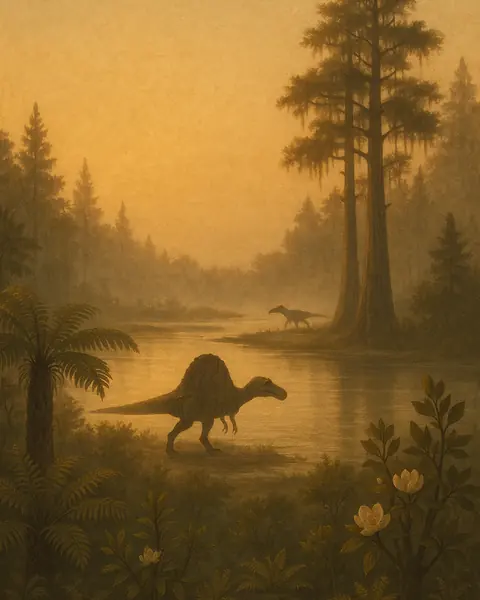
The 12 cards
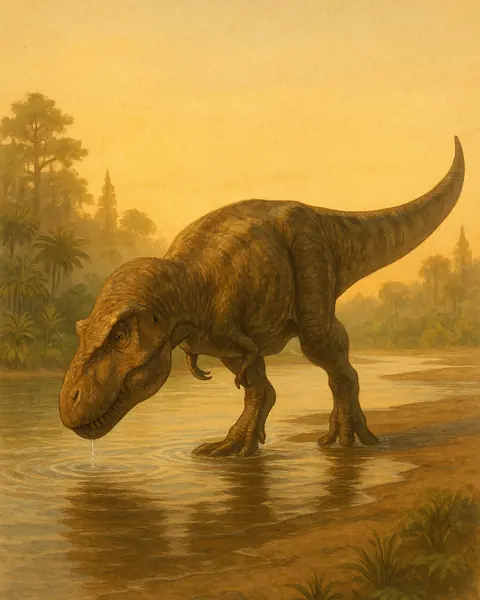
With large forward-facing eyes set in a broad skull, Tyrannosaurus rex may have had a binocular field of view estimated at about 55 degrees — wider than a modern hawk's — giving it excellent depth perception.
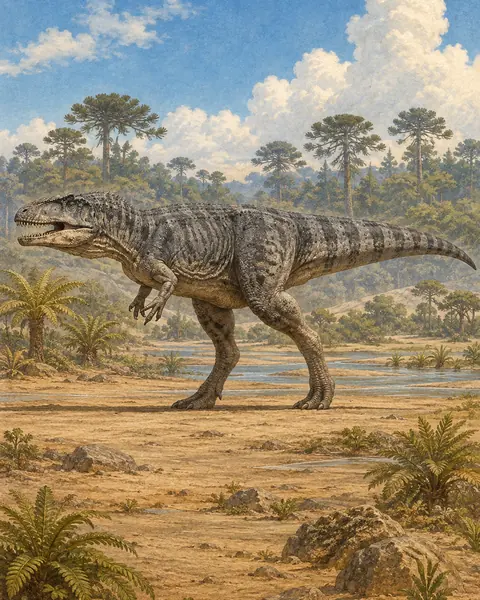
Giganotosaurus was one of the largest meat-eating dinosaurs ever found — reaching up to about 13 meters, slightly longer than Tyrannosaurus rex, though more lightly built.
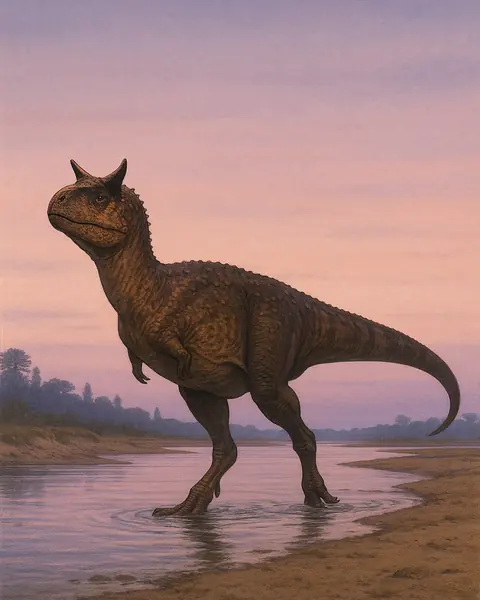
For its size, Carnotaurus carried the largest tail-driven leg muscles of any meat-eating dinosaur yet studied — an engine estimated at roughly 15 percent of its body weight that may have made it one of the fastest of the big predatory dinosaurs.
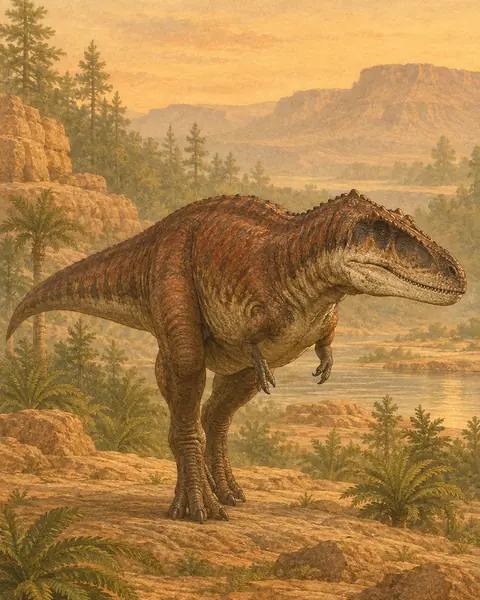
Carcharodontosaurus — its name means 'shark-toothed lizard' — had an enormous skull, an estimated 1.6 meters long when complete, lined with long, serrated, blade-like teeth and ranking among the largest skulls of any known meat-eating dinosaur.
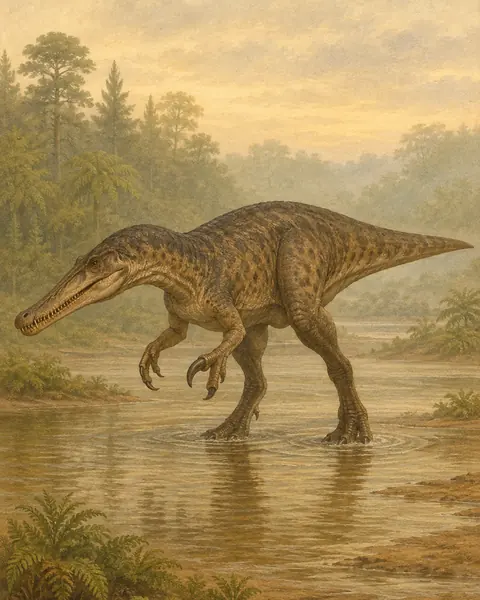
Baryonyx is named for its huge, curved thumb claw — about 30 centimetres long on the outer curve — set on a powerful, robust hand.
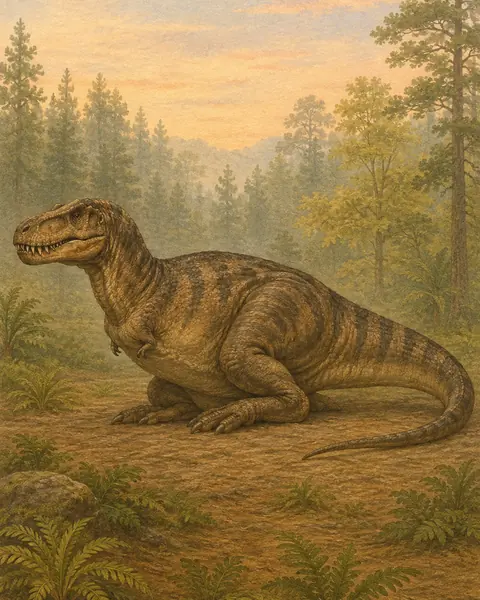
Tarbosaurus was the Asian counterpart of Tyrannosaurus rex — a deep-skulled tyrannosaur up to about 10 metres long, with thick teeth whose crowns reached about 11 centimetres.
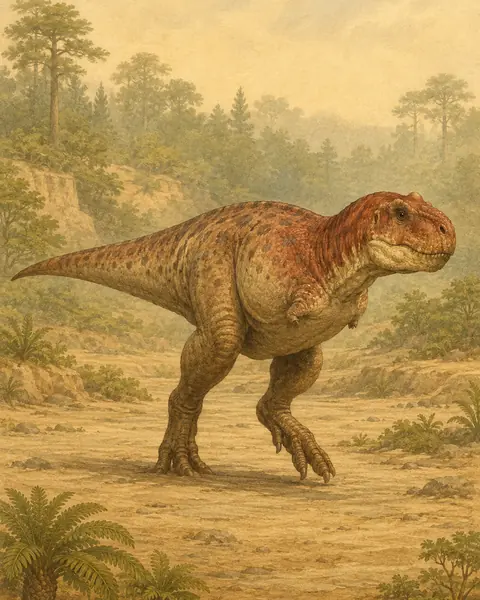
Majungasaurus is one of the very few dinosaurs known from direct fossil evidence to have sometimes eaten others of its own kind — its distinctive tooth marks turn up on the bones of other Majungasaurus.
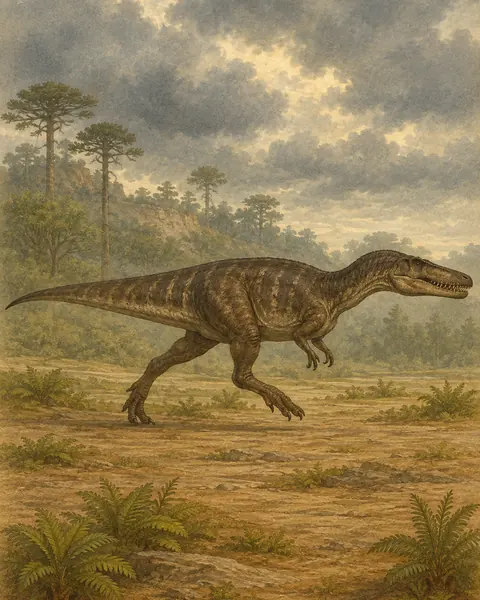
Mapusaurus is known from a bonebed of at least seven individuals of different ages — one of the richest concentrations of a single giant meat-eater ever found, which has led scientists to cautiously suggest it may have gathered, or even hunted, in groups.
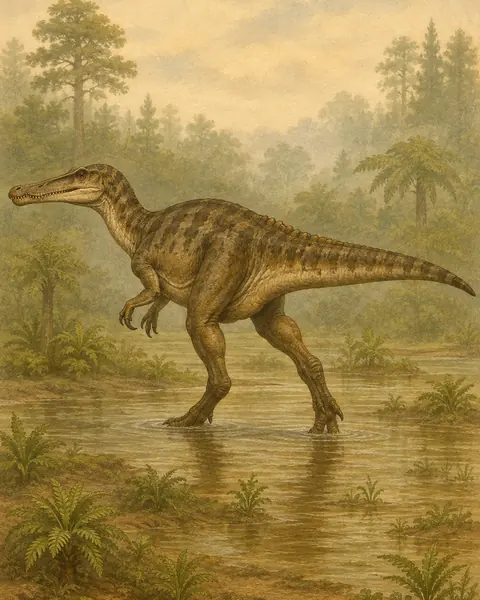
Suchomimus — its name means 'crocodile mimic' — had a long, narrow, crocodile-like snout lined with more than 100 small conical teeth, ideal for gripping slippery fish.
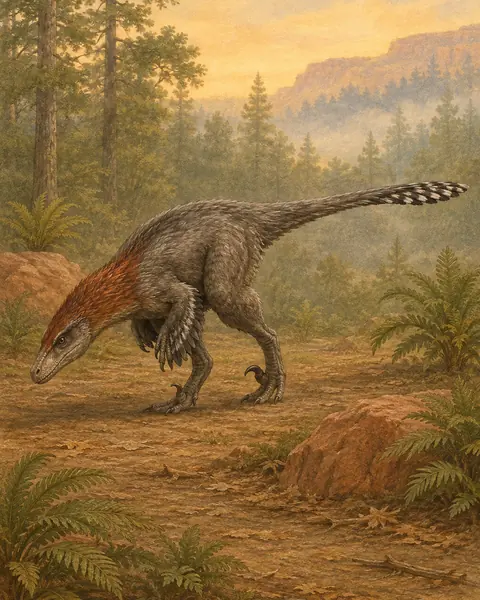
Utahraptor was the largest known member of the raptor family (the dromaeosaurids), and each foot bore an enormous sickle-shaped claw about 22 centimetres long along its curve — perhaps 24 cm once its horny sheath is added.
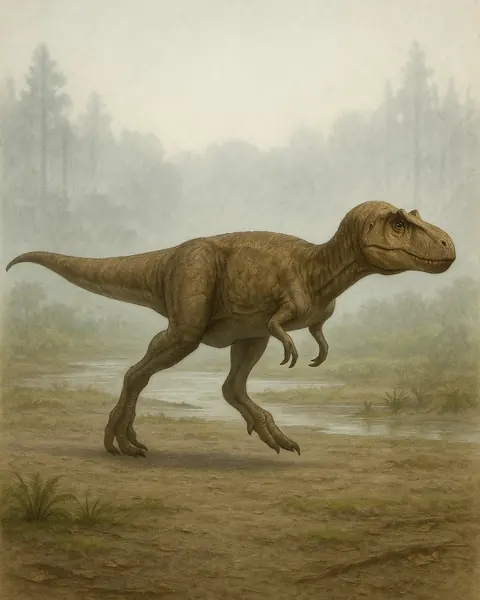
A single Alberta bonebed has yielded at least a dozen Albertosaurus — and up to 26 by some counts — ranging from two-year-olds to an aged adult of around 28, one of the richest concentrations of a single tyrannosaur ever found.
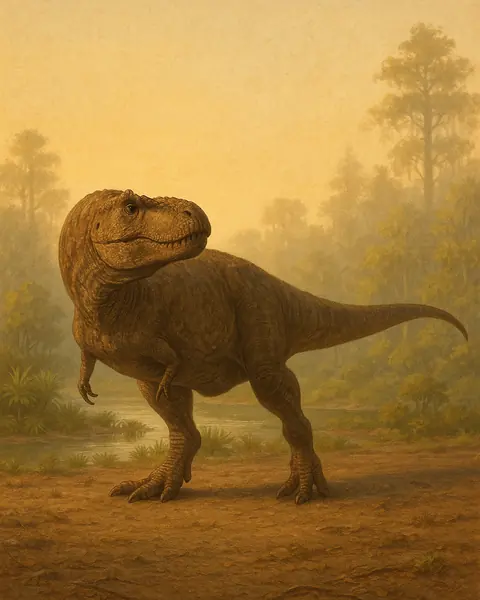
Daspletosaurus carried a massive skull more than a metre long — deeper and more heavily built than those of the slender tyrannosaurs sharing its world — set with dozens of long, sturdy teeth.