 Fossil Deck
Hatzegopteryx
Hatzegopteryx thambema
Hatzegopteryx was a pterosaur (azhdarchid) that lived in Europe about 72–66 million years ago, in the Late Cretaceous. It was 10–12 m (33–39 ft) wingspan long. It was not a dinosaur.
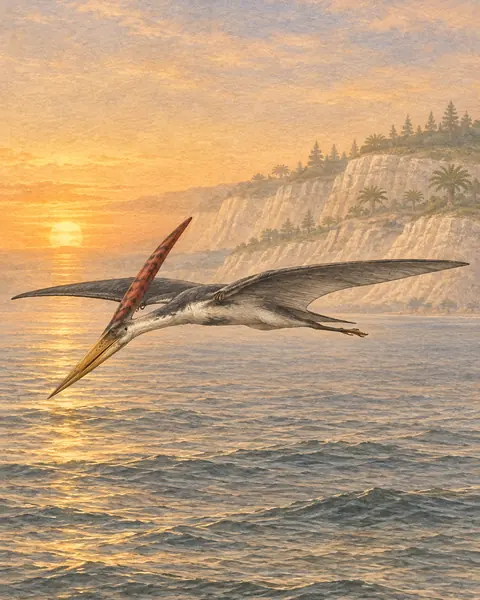
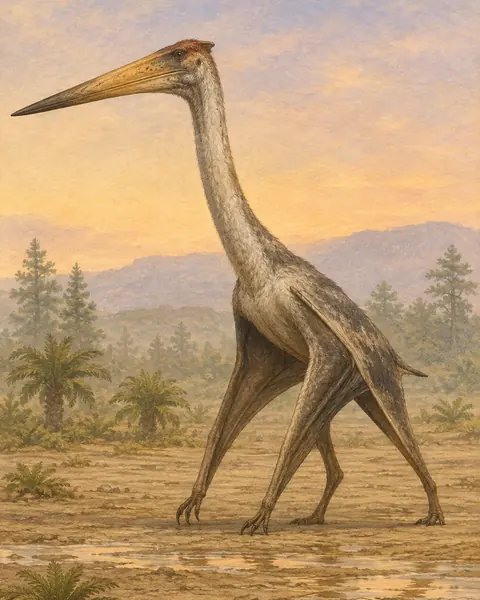
Hatzegopteryx was a giant pterosaur, not a dinosaur, with an estimated wingspan of 10 to 12 meters. It lived on Hațeg Island, where no large meat-eating dinosaurs lived, and it was probably the island's top predator. Its skull and neck were far stouter than those of other giant pterosaurs.
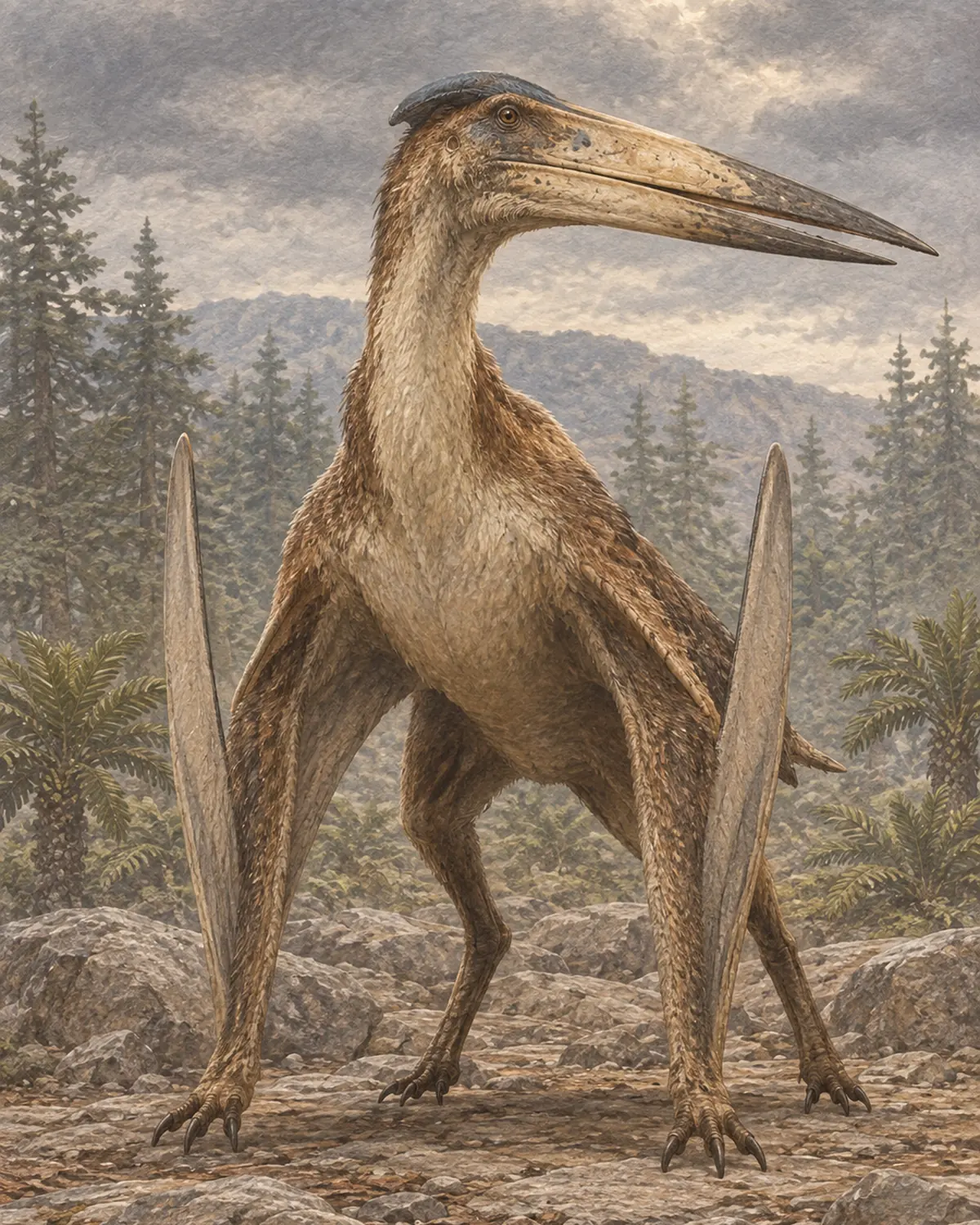
Quick facts about Hatzegopteryx
- Scientific name
- Hatzegopteryx thambema, named in 2002
- Group
- Pterosaur (azhdarchid), not a dinosaur
- Lived
- About 72–66 million years ago (Late Cretaceous)
- Diet
- Carnivore
- Length
- 10–12 m (33–39 ft) wingspan
- Height
- About as tall as a giraffe when standing (rough estimate)
- Weight
- Not reliably estimated; the largest individuals were probably well over 100 kg (220 lb)
- Fossils found in
- Europe (Hațeg Basin, Transylvania, Romania; Densuș-Ciula Formation)
- Fossil record
- Rare: known from partial remains
Was Hatzegopteryx a dinosaur?
No. Hatzegopteryx was a pterosaur, not a dinosaur. It lived in the age of the dinosaurs, but it belonged to a different group of animals.
What was Hatzegopteryx like?
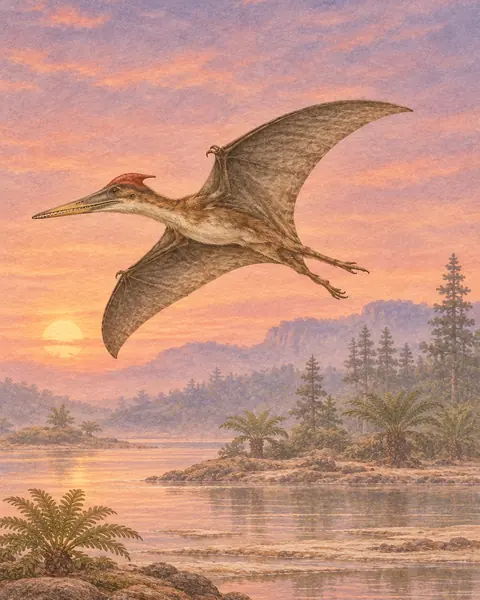
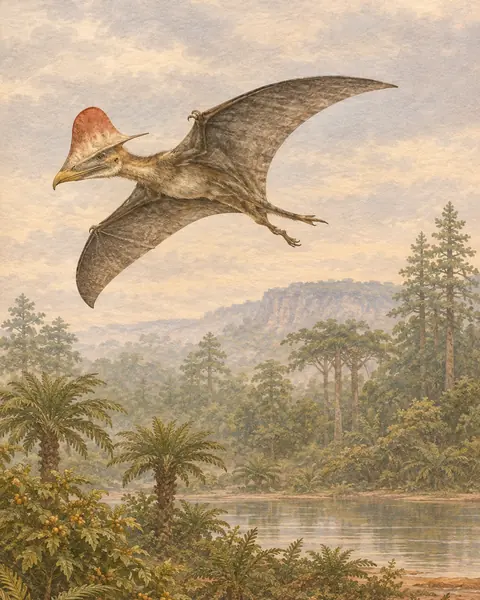
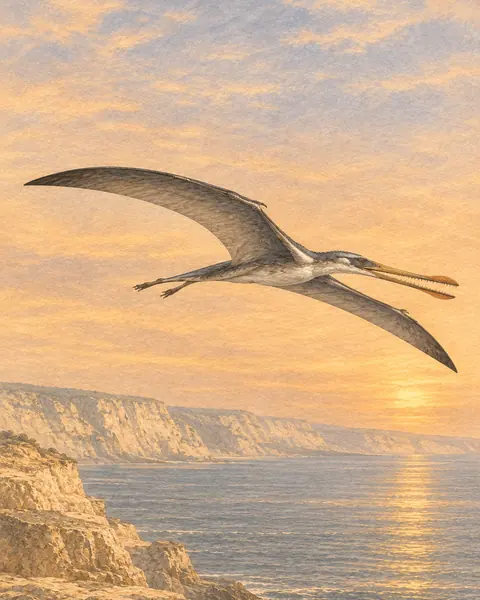
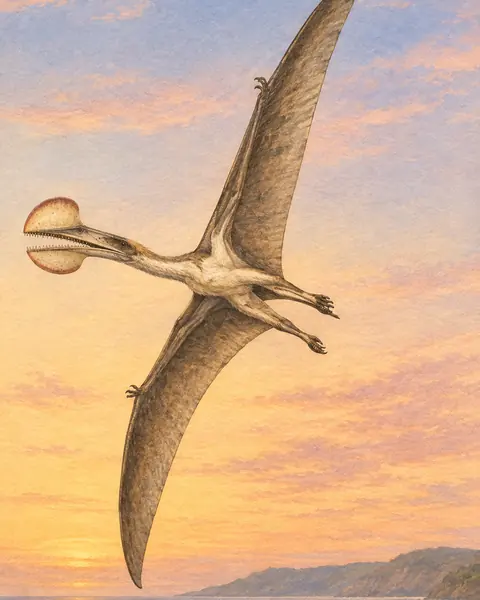
Hatzegopteryx was an azhdarchid pterosaur, a flying reptile and not a dinosaur, and one of the biggest pterosaurs known, with a wingspan estimated at 10 to 12 meters. Its skull may have reached about 2.5 meters in length, among the largest skulls of any land-living animal, and it was unusually wide and heavily built, with spongy bone instead of hollow bone. The neck was short and powerful, about 1.5 meters long, roughly half the length of other azhdarchids of similar size. Like all azhdarchids it had a long, toothless beak and a short tail. It lived on Hațeg Island, a landmass in the warm Tethys Sea where the dinosaurs were small island dwarfs and big meat-eating dinosaurs were absent. Hatzegopteryx was probably the island's apex predator, able to tackle prey larger than its relatives did. All of this is reconstructed from fragments, so the picture may change.
How big was Hatzegopteryx?
Adult Hatzegopteryx estimates: length 10–12 m (33–39 ft) wingspan, height about as tall as a giraffe when standing (rough estimate), weight Not reliably estimated; the largest individuals were probably well over 100 kg (220 lb). Where a range is given, it spans the published estimates for adults.
When did Hatzegopteryx live?
Hatzegopteryx lived about 72–66 million years ago, in the Late Cretaceous.
Where have Hatzegopteryx fossils been found?
Its fossils come from Europe (Hațeg Basin, Transylvania, Romania; Densuș-Ciula Formation).
Who discovered Hatzegopteryx?
The first Hatzegopteryx bones were found during a student dig in the late 1970s in the Hațeg Basin of Transylvania, Romania. Eric Buffetaut, Dan Grigorescu and Zoltan Csiki named Hatzegopteryx thambema in 2002 from parts of a skull and a humerus. The name means 'Hațeg basin wing', and thambema is Greek for 'terror' or 'monster'.
How complete are the fossils of Hatzegopteryx?
Known from parts of a skull and a humerus plus a few other bones, so its size comes from comparison with better-known azhdarchids.
Hatzegopteryx in Fossil Deck
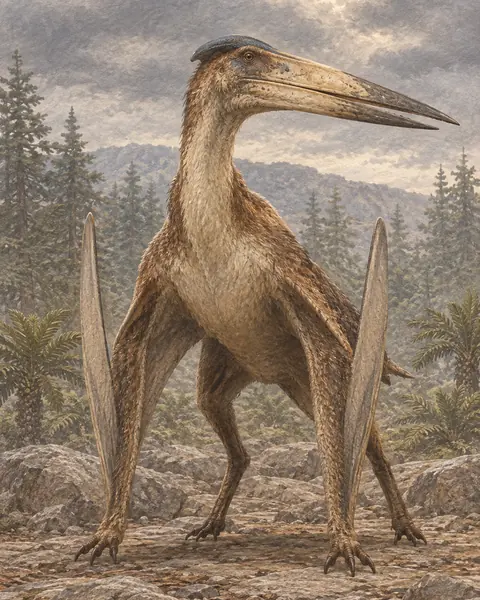
Hatzegopteryx appears on one card, each painted for its deck.
Facts and sizes last checked November 24, 2026. How we check them.