 Fossil Deck
Quetzalcoatlus
Quetzalcoatlus northropi
Quetzalcoatlus was a pterosaur (azhdarchid) that lived in North America about 68–66 million years ago, in the Late Cretaceous. It was 10–11 m (33–36 ft) wingspan long and weighed 150–250 kg (331–551 lb). It was not a dinosaur.
Quetzalcoatlus is a contender for the largest flying animal ever found, with a wingspan estimated at 10 to 11 meters. It was a pterosaur, not a dinosaur, with a long toothless beak and a tall, stork-like stance. The giant species is known from just a partial wing, so its exact size is still argued over.
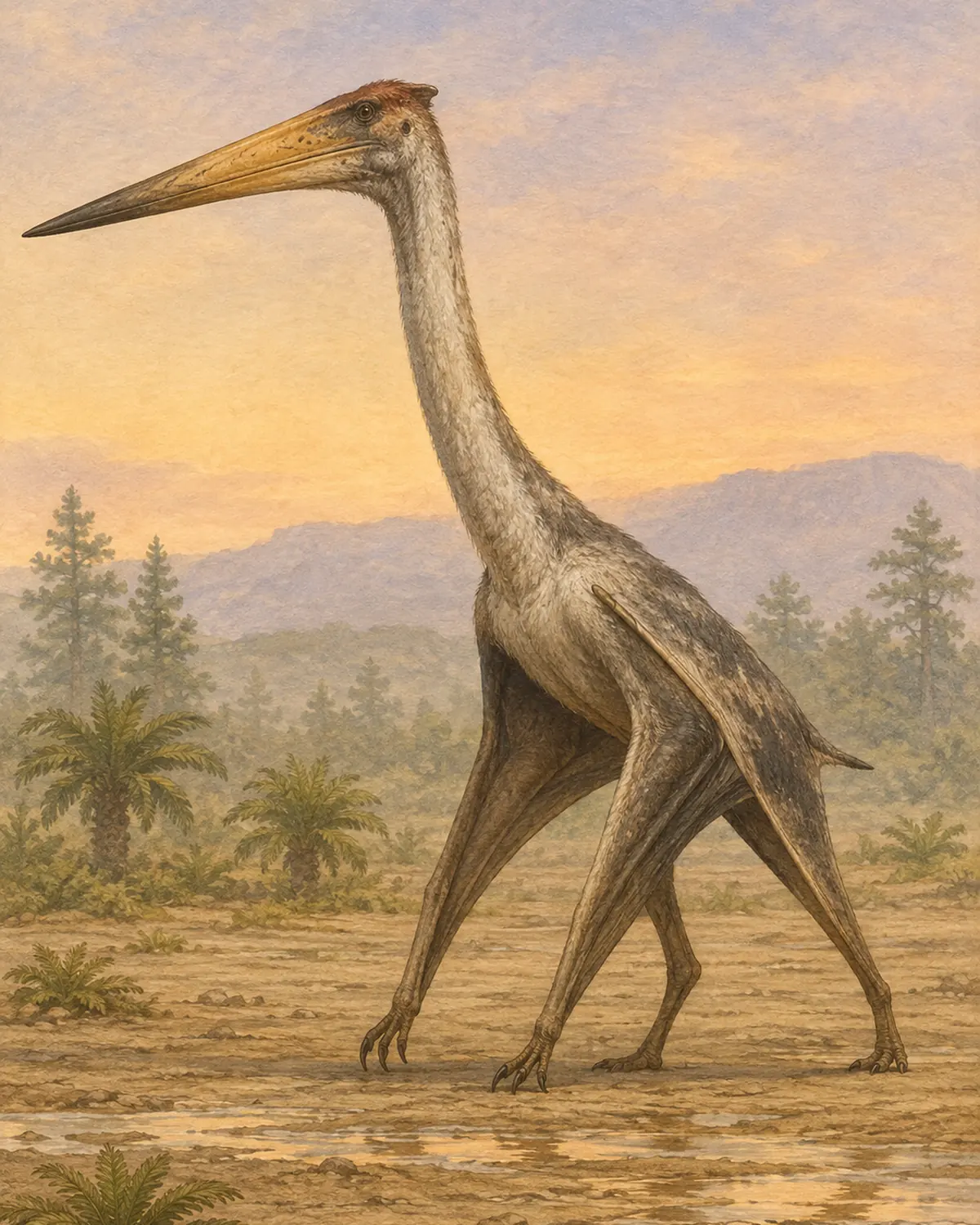
Quick facts about Quetzalcoatlus
- Scientific name
- Quetzalcoatlus northropi, named in 1975
- Group
- Pterosaur (azhdarchid), not a dinosaur
- Lived
- About 68–66 million years ago (Late Cretaceous)
- Diet
- Carnivore
- Length
- 10–11 m (33–36 ft) wingspan
- Height
- 2–3 m (6.6–9.8 ft) at the shoulder
- Weight
- 150–250 kg (331–551 lb)
- Fossils found in
- North America (Big Bend National Park, Texas, USA; Javelina Formation)
- Fossil record
- Rare: known from partial remains
Was Quetzalcoatlus a dinosaur?
No. Quetzalcoatlus was a pterosaur, not a dinosaur. It lived in the age of the dinosaurs, but it belonged to a different group of animals.
What was Quetzalcoatlus like?
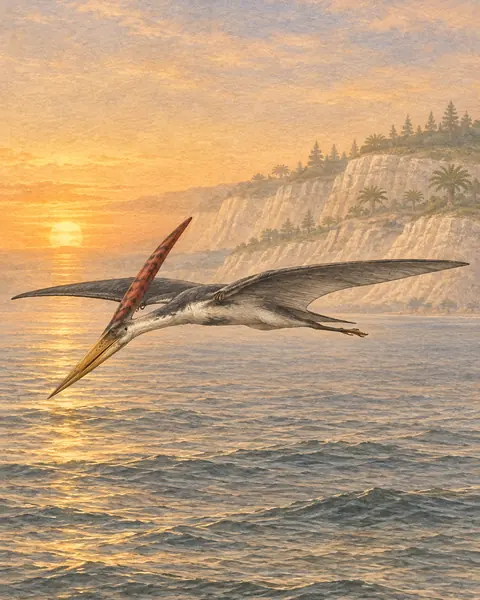
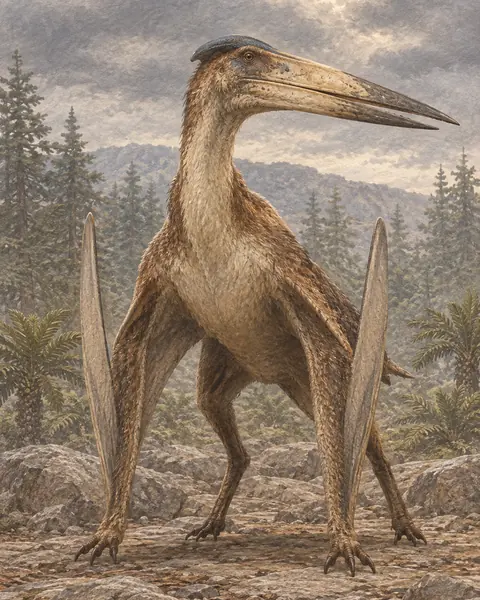
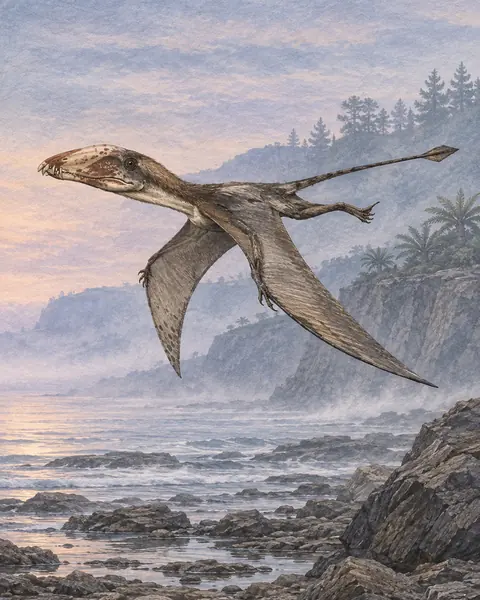
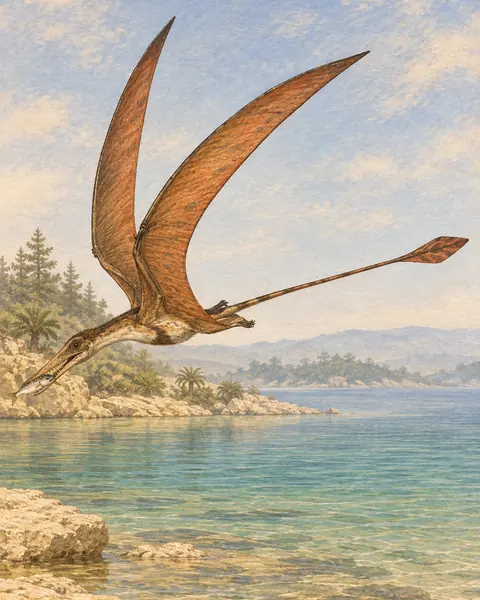
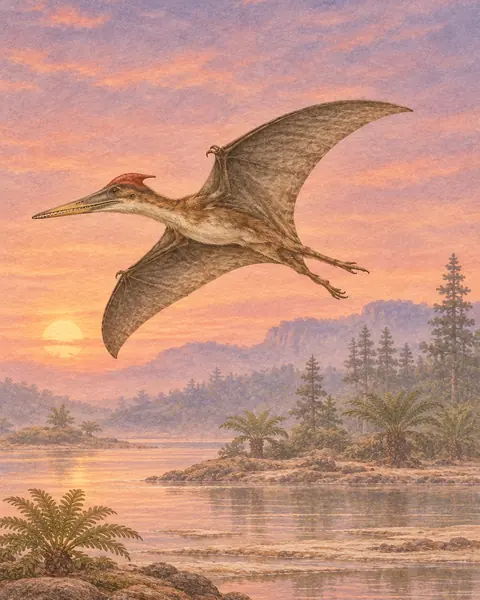
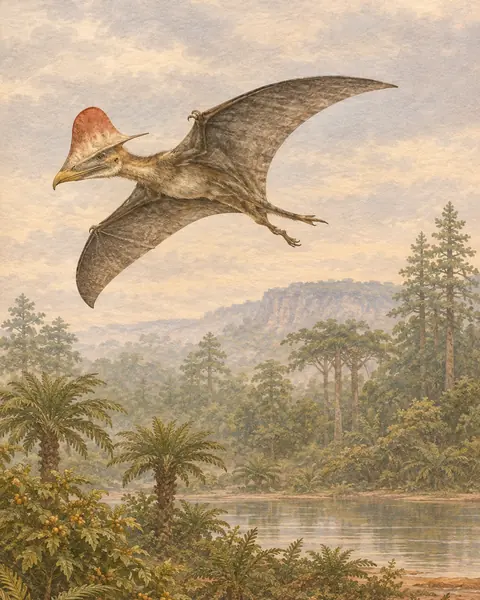
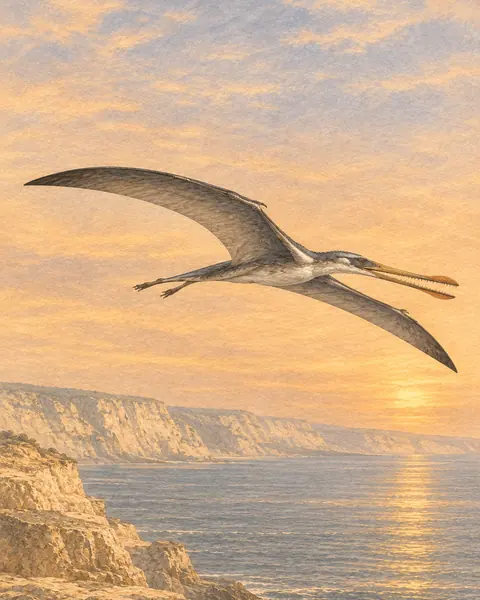
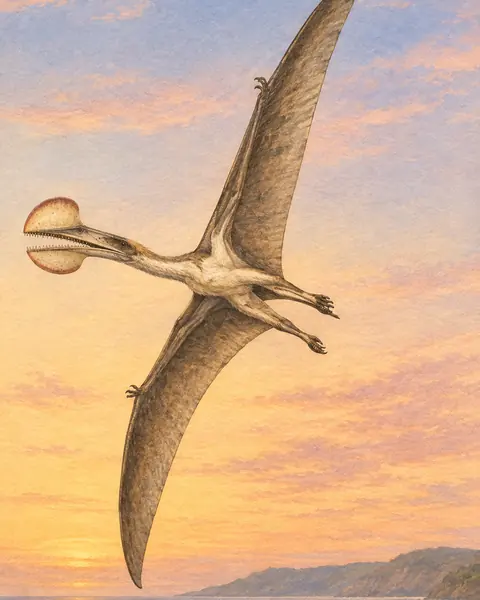
Quetzalcoatlus was an azhdarchid pterosaur, a flying reptile of a different branch from the dinosaurs, and Quetzalcoatlus northropi is a candidate for the largest flying animal ever discovered. Its size is hard to pin down because the giant species is known from only one partial wing: estimates of its wingspan have ranged from about 5 to 25 meters, with recent ones around 10 to 11. Azhdarchids had long legs, very long necks, short tails and long, slender, toothless beaks, and they were strong walkers on all fours. Rather than skimming the sea, Quetzalcoatlus most likely stalked open ground the way storks and ground hornbills do, picking up small animals in its beak. Standing with its wings folded, it would have been about as tall as a giraffe. A second, smaller species, Quetzalcoatlus lawsoni, is known from more than 200 specimens in nearby rocks and gives most of what we know about the skull and body.
How big was Quetzalcoatlus?
Adult Quetzalcoatlus estimates: length 10–11 m (33–36 ft) wingspan, height 2–3 m (6.6–9.8 ft) at the shoulder, weight 150–250 kg (331–551 lb). Where a range is given, it spans the published estimates for adults.
When did Quetzalcoatlus live?
Quetzalcoatlus lived about 68–66 million years ago, in the Late Cretaceous.
Where have Quetzalcoatlus fossils been found?
Its fossils come from North America (Big Bend National Park, Texas, USA; Javelina Formation).
Who discovered Quetzalcoatlus?
Graduate student Douglas Lawson found the first fragments in 1971 in the Javelina Formation of Big Bend National Park, Texas, and described Quetzalcoatlus northropi in 1975. The name honours the Aztec feathered-serpent god Quetzalcoatl and Jack Northrop, designer of a tailless flying-wing aircraft. Lawson called it 'without doubt the largest flying animal presently known.' The name-bearing specimen is a partial wing, TxVP 41450-3.
How complete are the fossils of Quetzalcoatlus?
The giant type species rests on a partial wing; a second, smaller species is known from hundreds of fragments, mostly of young or smaller individuals.
Quetzalcoatlus in Fossil Deck
Quetzalcoatlus appears on one card, each painted for its deck.
Facts and sizes last checked November 24, 2026. How we check them.