 Fossil Deck
Iguanodon
Iguanodon bernissartensis
Iguanodon was an iguanodontian ornithopod that lived in Europe about 126–122 million years ago, in the Early Cretaceous. It was 9–11 m (30–36 ft) long and weighed 3–4.5 tonnes (3.3–5 tons).
When Gideon Mantell first reconstructed Iguanodon in 1825 from a few teeth and bones, he mounted its now-famous thumb spike on the nose like a horn. Decades later, dozens of complete skeletons from a Belgian coal mine let scientists correct the mistake. As one of the first three animals ever recognized as dinosaurs, Iguanodon helped launch the science itself.
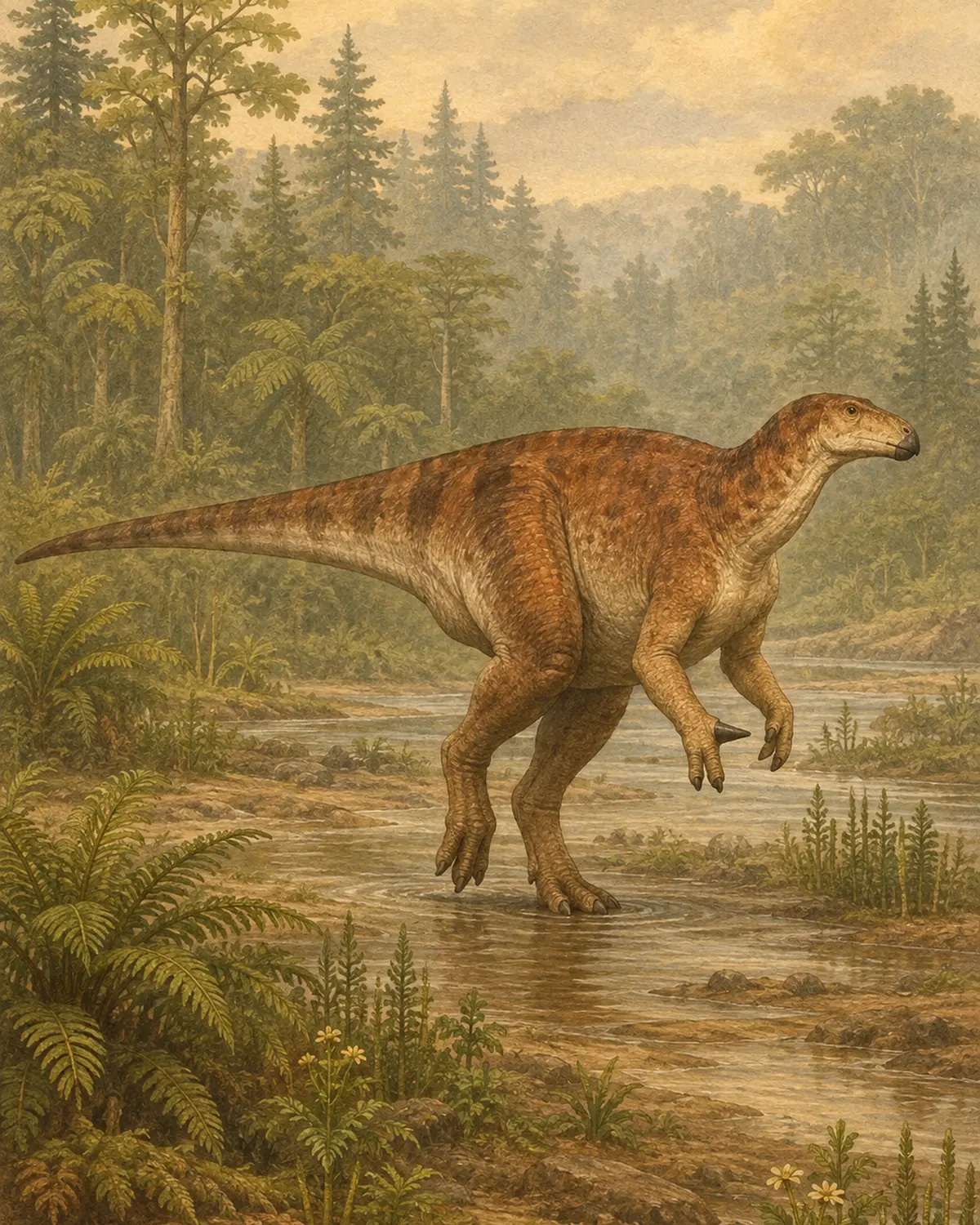
Quick facts about Iguanodon
- Scientific name
- Iguanodon bernissartensis, named in 1825
- Group
- Dinosaur (iguanodontian ornithopod)
- Lived
- About 126–122 million years ago (Early Cretaceous)
- Diet
- Herbivore
- Length
- 9–11 m (30–36 ft)
- Height
- About 3 m (9.8 ft) at the hip
- Weight
- 3–4.5 tonnes (3.3–5 tons)
- Fossils found in
- Western Europe
- Fossil record
- Common: known from many good fossils
What was Iguanodon like?
When Gideon Mantell first reconstructed Iguanodon in the 1820s from a few teeth and bones, he mounted its now-famous thumb spike on the nose like a horn — a mistake not corrected until dozens of complete skeletons emerged from a Belgian coal mine decades later. Those skeletons revealed a very different animal: a bulky plant-eater up to about eleven metres long, whose hand carried a conical spike where a thumb would be, three hoof-like weight-bearing fingers, and a flexible little finger for grasping. It could move on two legs or four, and behind its beak lay hundreds of self-sharpening teeth set in cheeked jaws that let it chew tough vegetation far more thoroughly than most reptiles — an advanced feeding system for its time. As one of the very first animals ever recognized as a dinosaur, and one of the three that Richard Owen used to define 'Dinosauria' in 1842, Iguanodon helped launch the science itself.
How big was Iguanodon?
Adult Iguanodon estimates: length 9–11 m (30–36 ft), height about 3 m (9.8 ft) at the hip, weight 3–4.5 tonnes (3.3–5 tons). Where a range is given, it spans the published estimates for adults.
When did Iguanodon live?
Iguanodon lived about 126–122 million years ago, in the Early Cretaceous.
Where have Iguanodon fossils been found?
Its fossils come from Western Europe.
Who discovered Iguanodon?
Teeth resembling a modern iguana's were found in Sussex, England around 1822, and Gideon Mantell named the genus Iguanodon in 1825 — only the second dinosaur ever scientifically described. In 1842 Richard Owen grouped it with two others to create 'Dinosauria.' In 1878, coal miners at Bernissart, Belgium uncovered dozens of nearly complete skeletons about 322 metres underground.
How complete are the fossils of Iguanodon?
The 1878 Bernissart coal-mine find in Belgium alone yielded around 30 relatively complete, articulated skeletons — making Iguanodon one of the best-documented large dinosaurs known.
Iguanodon in Fossil Deck
Iguanodon appears on 3 cards, each painted for its deck.
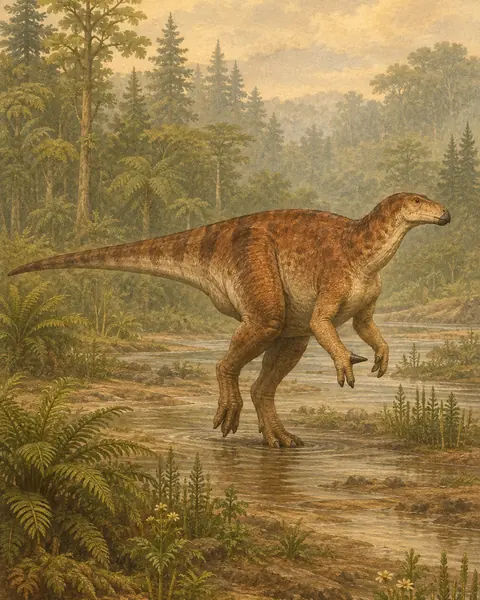
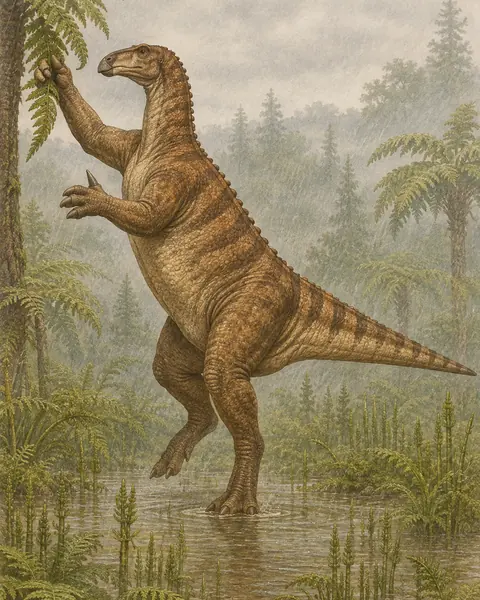
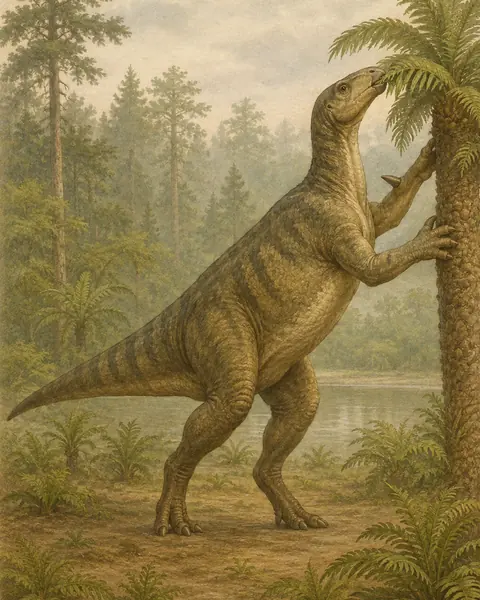
Facts and sizes last checked November 24, 2026. How we check them.