 Fossil Deck
Parasaurolophus
Parasaurolophus walkeri
Parasaurolophus was a hadrosaurid dinosaur that lived in North America about 76.5–73 million years ago, in the Late Cretaceous. It was 7.5–9.5 m (25–31 ft) long and weighed 2.6–5 tonnes (2.9–5.5 tons).
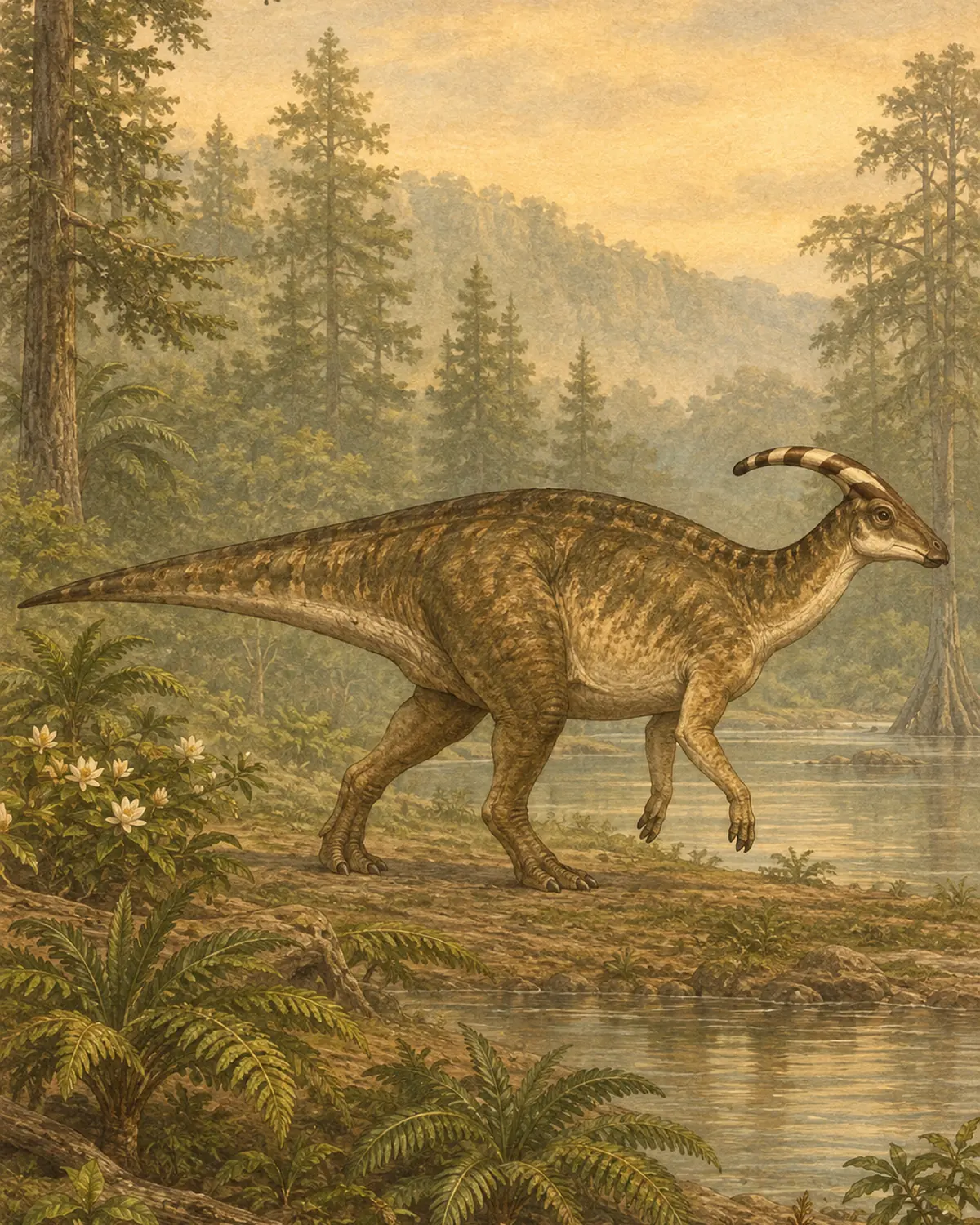
Parasaurolophus carried the most extravagant crest of any duck-billed dinosaur — a long, curved, hollow tube that may have worked like a natural trumpet, channeling air through looping nasal passages to produce deep, resonating calls. Despite its fame it is known from only a handful of specimens, and no skeleton preserves the whole animal.
Quick facts about Parasaurolophus
- Scientific name
- Parasaurolophus walkeri, named in 1922
- Group
- Dinosaur (hadrosaurid dinosaur)
- Lived
- About 76.5–73 million years ago (Late Cretaceous)
- Diet
- Herbivore
- Length
- 7.5–9.5 m (25–31 ft)
- Height
- About 2.7 m (8.9 ft) at the hip
- Weight
- 2.6–5 tonnes (2.9–5.5 tons)
- Fossils found in
- North America
- Fossil record
- Rare: known from partial remains
What was Parasaurolophus like?
Parasaurolophus carried the most extravagant crest of any duck-billed dinosaur — a long, curved, hollow tube reaching up to roughly a metre and a half. Far from solid, the crest was threaded by nasal passages that looped from the nostrils up through its length and back again; CT scans of the bony tubes suggest they could have worked like a natural trumpet, producing deep, resonating calls to carry across the herd. The crest was almost certainly a visual signal too, and it grew longer and more pronounced as the animal aged, so young individuals looked strikingly different from adults. Like other hadrosaurs it had a broad, toothless beak backed by hundreds of tightly packed grinding teeth, and it could move on either two legs or four while browsing tough vegetation. Despite its fame it is known from only a handful of specimens across three species, and no skeleton preserves the whole animal — even the best is missing its tail and lower legs.
How big was Parasaurolophus?
Adult Parasaurolophus estimates: length 7.5–9.5 m (25–31 ft), height about 2.7 m (8.9 ft) at the hip, weight 2.6–5 tonnes (2.9–5.5 tons). Where a range is given, it spans the published estimates for adults.
When did Parasaurolophus live?
Parasaurolophus lived about 76.5–73 million years ago, in the Late Cretaceous.
Where have Parasaurolophus fossils been found?
Its fossils come from North America.
Who discovered Parasaurolophus?
First uncovered in 1920 in the Red Deer River badlands of Alberta, and named Parasaurolophus walkeri by William Parks in 1922 for museum patron Sir Edmund Walker. Two further species were later described from equally sparse material in New Mexico and Utah. Across all three, only a handful of good skulls and partial skeletons are known, and no complete skeleton has ever been recovered.
How complete are the fossils of Parasaurolophus?
No complete Parasaurolophus skeleton has ever been found in any species; fewer than a dozen worthwhile specimens are known, and even the best (the P. walkeri holotype) is missing its tail and lower hindlimbs.
Parasaurolophus in Fossil Deck
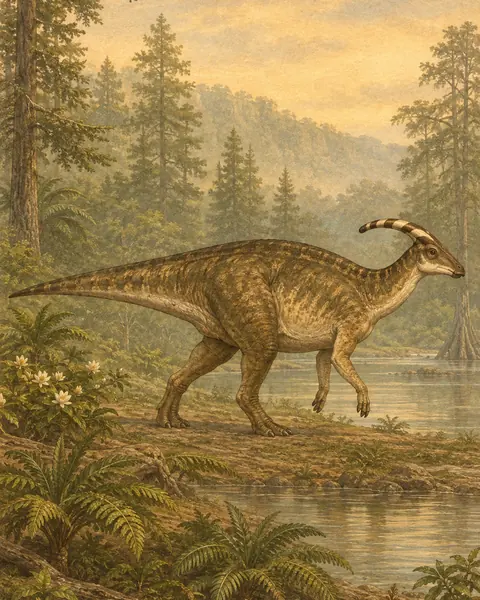
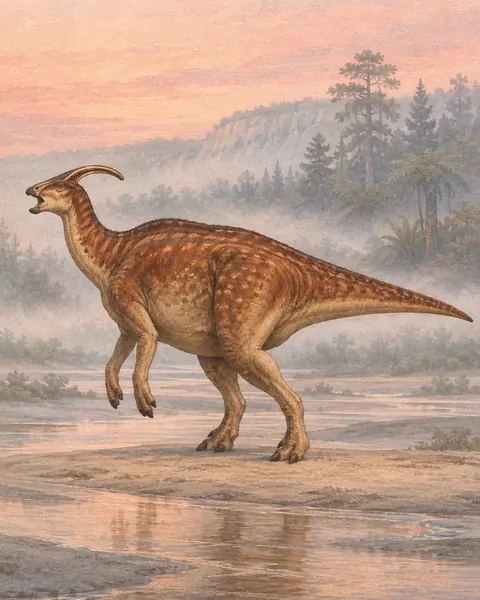
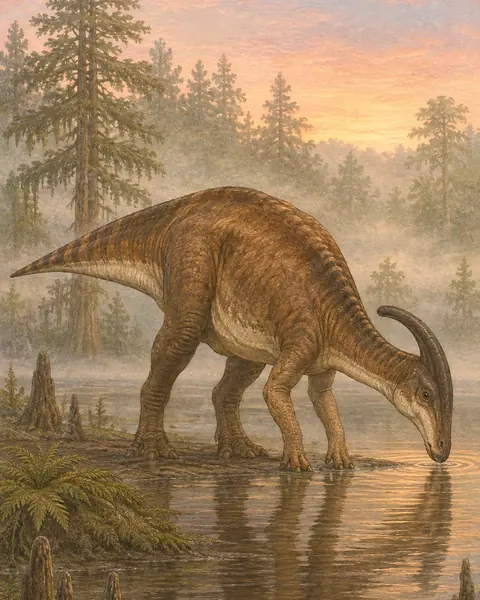
Parasaurolophus appears on 3 cards, each painted for its deck.
Facts and sizes last checked November 24, 2026. How we check them.