 Fossil Deck
Therizinosaurus
Therizinosaurus cheloniformis
Therizinosaurus was a therizinosaurid theropod that lived in Asia about 70 million years ago, in the Late Cretaceous. It was 9–10 m (30–33 ft) long and weighed 3–6.6 tonnes (3.3–7.3 tons).
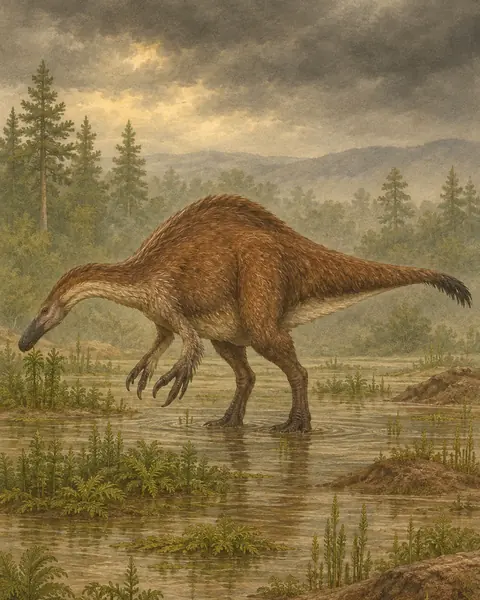
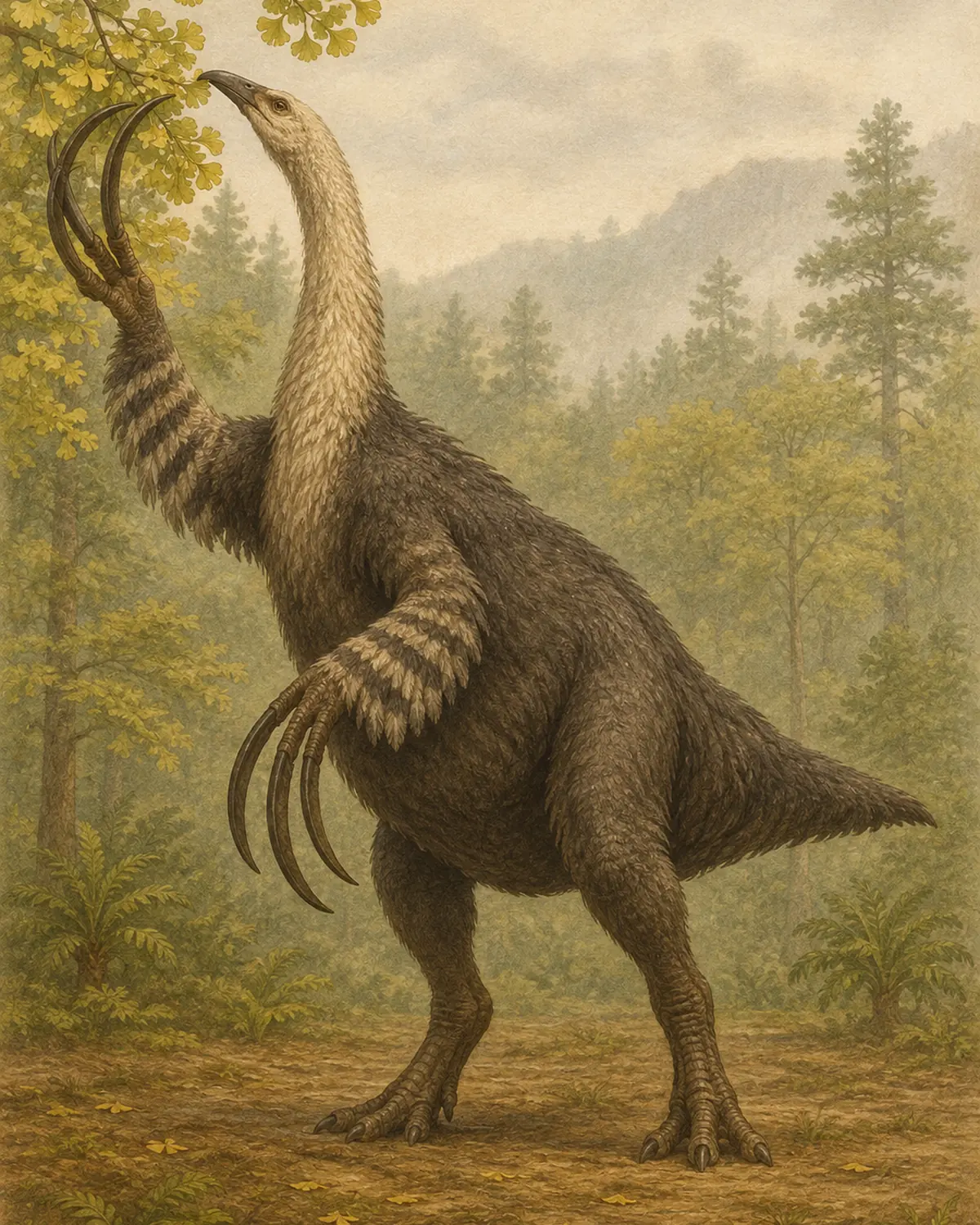
Therizinosaurus carried the longest claws of any known animal: three scythe-like blades on each hand, with the bone alone more than half a metre long and a horn sheath adding more. Yet it was a plant-eater, a pot-bellied giant with a small beaked head, and the claws probably served to hook down branches or to display, not to kill.
Quick facts about Therizinosaurus
- Scientific name
- Therizinosaurus cheloniformis, named in 1954
- Group
- Dinosaur (therizinosaurid theropod)
- Lived
- About 70 million years ago (Late Cretaceous)
- Diet
- Herbivore
- Length
- 9–10 m (30–33 ft)
- Height
- About 3 m (9.8 ft) at the hip
- Weight
- 3–6.6 tonnes (3.3–7.3 tons)
- Fossils found in
- Asia (Mongolia, Gobi Desert; Nemegt Formation)
- Fossil record
- Rare: known from partial remains
What was Therizinosaurus like?
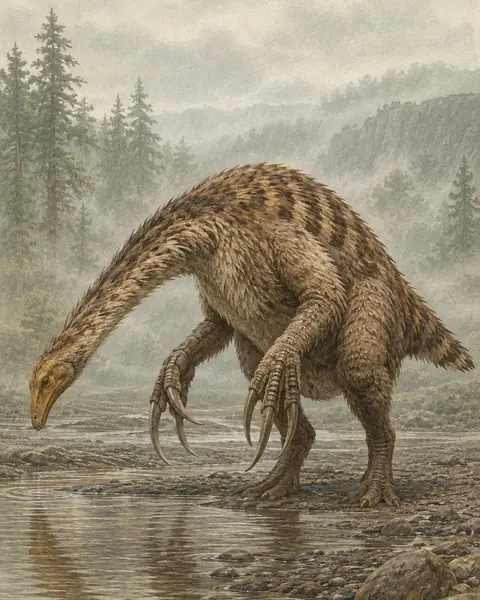
Therizinosaurus carried the longest claws of any known animal. Each hand ended in three slightly curved, blade-like claws, the bone of the longest measuring more than half a metre, and in life a horny sheath would have made them longer still. For all that, this was a plant-eater. It had a small head with a toothless beak and leaf-shaped cheek teeth, a long neck, a broad, pot-bellied body to digest leaves, and strong legs with four toes. The arms were very long, and the claws were most likely used to hook branches toward the mouth, to push through foliage, or in display and sparring, with defence against predators a possible extra use. Close relatives such as Beipiaosaurus were feathered, so a covering of simple feathers is likely, though no feather impressions are known for Therizinosaurus itself. It lived on the wetter, wooded floodplains of Late Cretaceous Mongolia.
How big was Therizinosaurus?
Adult Therizinosaurus estimates: length 9–10 m (30–33 ft), height about 3 m (9.8 ft) at the hip, weight 3–6.6 tonnes (3.3–7.3 tons). Where a range is given, it spans the published estimates for adults.
When did Therizinosaurus live?
Therizinosaurus lived about 70 million years ago, in the Late Cretaceous.
Where have Therizinosaurus fossils been found?
Its fossils come from Asia (Mongolia, Gobi Desert; Nemegt Formation).
Who discovered Therizinosaurus?
A Soviet-Mongolian expedition found the first claws in the Gobi Desert in 1948. Soviet palaeontologist Evgeny Maleev named the animal in 1954. Its name means 'scythe lizard,' and the species name cheloniformis, 'turtle-shaped,' records an early guess that the huge claws came from some giant turtle-like animal. Only when more complete relatives turned up decades later did its true shape become clear.
How complete are the fossils of Therizinosaurus?
Known from arm, hand, leg and a few other bones, so its full shape is pieced together from better-known relatives.
Therizinosaurus in Fossil Deck
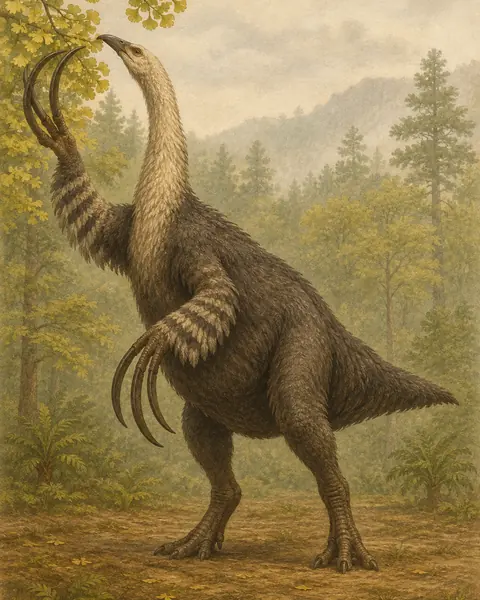
Therizinosaurus appears on 2 cards, each painted for its deck.
Facts and sizes last checked November 24, 2026. How we check them.
More from Weird & Wonderful Dinosaurs
See the whole deck